Texas LDN Doctor
What Most People Get Wrong About Low-Dose Naltrexone (LDN)
. . . And Why It Matters for Autoimmune & Chronic Inflammation Care
Updated November 20, 2025 by Louis Esquivel, MD
Low-Dose Naltrexone (LDN) is often misunderstood as simply a small dose of regular naltrexone. In reality, LDN uses a completely different mechanism involving immune modulation, microglial calming, and endorphin regulation. Learn how LDN works and why it helps autoimmune and inflammatory conditions.
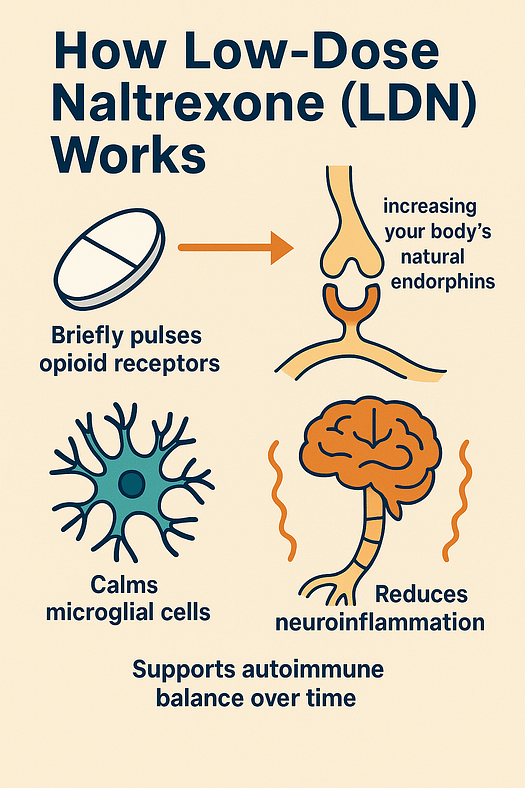
Most People Misunderstand What LDN Actually Does
If you’ve heard of Low-Dose Naltrexone (LDN), you might assume it’s just a smaller version of the 50 mg naltrexone used for addiction treatment. That misunderstanding is extremely common—even among medical professionals—and it leads to confusion about what LDN can and cannot do.
The truth is:
LDN behaves like a different medication entirely.
It uses a separate mechanism of action, has different effects on the body, and supports immune health in ways standard-dose naltrexone does not.
Understanding this difference can help patients set realistic expectations and get better results.
1. LDN Doesn’t Work by Blocking Opioids All Day
Standard-dose naltrexone (50–100 mg) works by continuously blocking opioid receptors.
LDN does not do this.
At low doses (typically 0.5–4.5 mg), LDN creates a short, temporary blockade of opioid receptors. This brief “pulse” actually stimulates your body to produce more of its natural endorphins.
Why this matters:
Instead of blocking your system, LDN encourages your body to enhance its own natural healing chemistry—particularly endorphins that help regulate mood, inflammation, and immune balance.
2. LDN Calms Overactive Immune Cells in the Nervous System
This is the most overlooked (and most important) aspect of how LDN works.
Your central nervous system contains special immune cells called microglia. These cells can become overactive in autoimmune diseases, chronic pain disorders, fibromyalgia, and conditions involving neuroinflammation.
When microglia stay activated, they release inflammatory chemicals such as:
LDN reduces this activity by blocking a receptor on microglia called TLR-4 (Toll-Like Receptor 4).
In plain English:
LDN helps overreactive immune cells calm down, reducing inflammation at the neurological level.
This is a completely separate mechanism from opioid receptor activity and explains why LDN can help conditions that don’t respond well to traditional medications.
3. LDN Is a Regulatory Therapy—Not a Quick Fix
LDN helps the body correct underlying immune imbalance. Because of this, its benefits appear gradually.
Most people experience the best results around:
LDN often improves symptoms in waves—periods of improvement followed by small fluctuations as the immune system recalibrates.
Why this matters:
LDN is not a steroid, not a painkiller, and not an “instant effect” medication.
Its power lies in gentle, steady improvement over time.
4. LDN Works Best as Part of a Comprehensive Autoimmune Strategy
LDN is rarely a standalone cure, but it can be a powerful addition to a patient’s current treatment plan.
It often works best when combined with:
5. LDN Is Not as “Experimental” as Many Believe
Although LDN is not FDA-approved for autoimmune conditions, it has:
In many cases, it offers symptom relief with significantly fewer side effects than common immunosuppressive medications.
The Bottom Line
LDN is not just a lower dose of the standard medication—it is a unique therapy with its own distinct mechanisms:
For many people living with autoimmune or chronic inflammatory conditions, this deeper understanding helps them approach LDN with clarity and confidence.
Considering LDN? Start With a Free Mini-Assessment
If you’re wondering whether LDN may help your condition, I offer a free mini assessment via a short online form.
After reviewing your information, I’ll send you a personalized reply explaining:
Click the button below to get started.
Get a free, no obligation Mini-Assessment
Not sure if you would be a good candidate for a trial of low dose naltrexone (LDN) ? Complete our free Mini-Assessment/Opinion and find out now!
Texas LDN Doctor
Services
LDN Prescription
LDN Doctor
LDN Telemedicine
© Copyright Texas LDN Doctor/Louis Esquivel MD PA. All Rights Reserved.